Showing posts with label invasive species. Show all posts

Thursday, September 6, 2012

Quick Hits: Fire Approaches Blowdown Area, Anoka Wildlife Corridor, Pesticides v Zebra Mussels

Fire Approaches Blowdown Area
The Superior National Forest has expanded a closure area, as the Wooden Leg Fire moves towards the high-risk 1999 blowdown area. The Wooden Leg Fire, which is only a quarter acre in size, has already sparked the closing of Ensign Lake some twenty miles from Ely. The closure has been epanded to several other lakes, in response to the fire's progression towards a tract of land that contains a great amount of highly flammable dead wood, the result of a wind storm over a decade ago.
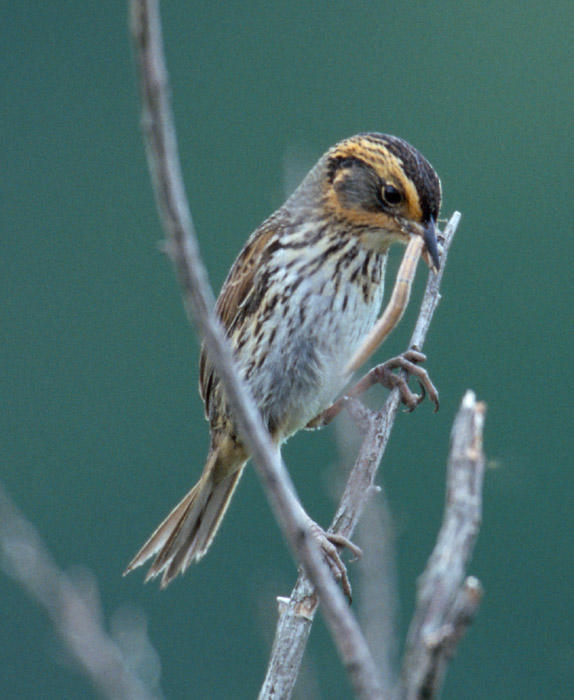
Nelson's sharp-tailed sparrow
Anoka Wildlife Corridor
John and Barb Anderson, fourth-generation Anoka landowners, have joined with the Minnesota Land Trust to protect valuable wildlife habitat in the urbanized county. The 80 acres of grasses and wetland provide key habitat for species identified by Minnesota's Comprehensive Wildlife Conservation Strategy, including the red-headed woodpecker, smooth green snake, and Nelson's sharp-tailed sparrow. Along with the 92 acre easement made by the family in 2005, over half of the 260 acre farm is preserved for wildlife. Funding for the project was provided by the Minnesota Environment and Natural Resources Trust Fund through their Metro Conservation Corridors program, which seeks to connect the disaparate patches of high-quality habitat throughout the metro, creating more resilient wildlife communities.

Pesticides v Zebra Mussels
The experimental use of pesticides to control zebra mussels may be working in one northern Minnesota lake, according to the DNR. The agency applied the treatment to Rose Lake in Otter Tail County last autumn when a small population of the invasive species was found in the lake. No zebra mussels have been found in the water samples from Rose Lake this summer, says DNR Invasive Species Specialist Nathan Olson. He urges caution, however. "From my experience with zebra mussels, they seem to have a really big increase in about two years,once they're found in a lake," Olson said. "If I don't see any zebra mussels for about two years, then I'm going to be more excited about our success rate."

Image Source: Phil Jeffrey

Tuesday, August 21, 2012

Ash Borers Found at Fort Snelling Golf Course

Emerald ash borers have made their way to yet another victim- the Fort Snelling Golf Club.

The infestation, reported by a forestry employee of the Minnesota Parks and Recreation Board, is the first new infestation of the year,  according to the Minnesota Department of Agriculture. The damage is extensive- officials believe they will have to cut down over 100 trees in the area- the course could lose over a fourth of its trees. In the words of Ralph Sievert, the Minneapolis Parks and Recreation Board's Director of Forestry, “We haven’t had any tree look this bad in the areas where we’ve been dealing it with so far.”

Hennepin County, where the infestation was found, is one of four counties already under quarantine, with exports of firewood and ash tree limbs forbidden. However, because the infested trees are close to the border of Dakota County, the Department of Agriculture will conduct a survey to determine if the infestation has spread there, as well. The Department has determined that the infestation at the golf club started some five years ago.

“It is something we’re going to continue to find in new places,” says Mark Abrahamson, an entomologist. “We’re not going to get rid of this bug. If we can slow it down and so that it can spread slower, it will do us a lot of good.”

The emerald ash borer arrived in the United States through Detroit in the 1990s and has since spread to fifteen states and two Canadian provinces. North America's ash trees have no resistance to the pest, and millions of trees have already succumbed. In the Minneapolis and Saint Paul together, over 5,000 infested trees have already been culled. Hoping to avoid a repeat of the devastation from previous tree epidemics such as Dutch elm disease, the state has explored avenues ranging from bug-detecting dogs to predatory wasps.

Information on recognizing an infestation can be found at the DNR website. Anyone who suspects their trees are infested is asked to contact the Department of Agriculture. The email address is arrest.the.pest@state.mn.us

Image Source: NYS DEC and Emerald Ash Borer Info

Sunday, August 19, 2012

A New Weapon In the War on Zebra Mussels

Zebra mussels may soon learn the name of fear- and that name is zequanox.

Zequanox is a bacteria, bred from the Pseudomonas fluorescens species, which can be found naturally protecting certain plants from breeds of parasitic fungi and nematodes. It has been selected by a team from the New York State Museum which has spent two decades researching a potential bacterial remedy to the zebra mussel invasion- a plague that has already infested over fifty of our state's lakes. The mussels, introduced through the Great Lakes in the 1980s, displace native species, cling to boats and docks, and even clog pipes, and as yet remain difficult to stop. A trial run being carried out on mussels at Lake Carlos with the help of the Minnesta DNR and US Geological Survey may change that, however.


The bacteria is not being introduced into the lake itself- instead, the mussels are being gathered and bathed in water that contains the bacteria for twelve hours, to measure their effectiveness against the mussels. In the words of USGS fisheries biologist Jim Luoma "What we're trying to do with this trailer is to mimic a treatment like it would be in a lake without actually applying the product to the lake." Previous tests have seen casualty rates of over 90%, with most deaths occurring within ten days of treatment.


Zebra mussels can clog pipes and engines


Denise Mayer, one of the researchers on the project, stresses that zequanox is not likely to be used on whole lakes- rather, the likely approach "is to use it as a tool to prevent infestations very early on if you find a localized infestation around a boat launch or marina or a dock,"and in this way prevent the further infestation of the lake.

Lake Peppin and Wisconsin's Lake Shawano will also be test sites, after the Lake Carlos trial is complete. 

Image Sources: National Atlas and Invasion of the Zebra Mussels

Thursday, August 16, 2012

Invasive Flies Arrive in Minnesota

A new fruit pest has found its way into our state, according to officials from the Minnesota Department of Agriculture.

The spotted wing drosophila

The spotted wing drosophila (Drosophila suzukii), a species of fruit fly from southeast Asia, has been found in berry patches in Ramsey and Hennepin counties. The drosophila, which was first detected in the United States in Hawaii in the 1980s, feeds on healthy and ripening fruits such as blackberries, raspberries, blueberries, and cherries. The fly arrived on the mainland of North America more recently, being found in California in 2008, and has since spread to several states across the country.

According to Bob Koch of the Department of Agriculture, the drosophila cuts a small incision into the skin of the fruit and lays its eggs inside so that they can feed on the seeds. The infested fruits often have no noticeable signs on them until after they are harvested. The incision can become a source of secondary infections by bacterial and fungal pathogens

Drosophila larvae in a strawberry

"If you start to see a bunch of maggots showing up in some of the fruits that you've harvested, and if it was fruit that looked fine at harvest time, then that might be a pretty good indicator that that pest is in the area," said Koch.

Anybody suspecting that they have an infestation of drosophila in their fruits is asked to call the state Department of Agriculture.