Showing posts with label energy. Show all posts

Wednesday, August 22, 2012

Energy Solutions Home on Display at State Fair

Builders, environmentalists, and anybody who pays for electricity will have a new exhibition to look forward to at this year's state fair- a home sized demonstration of energy efficiency.

The Energy Solutions Home, part of the Eco Experience exhibit, is a partnership of public agencies, contractors, retailers, utilities, advocacy groups, and other parties, presented by the Minnesota Department of Commerce.  will show a range of energy-saving technologies. There will be a Green Materials and Efficient Appliances Display, a Heating, Ventilation, and Air Condition Display, and a Sustainability Stage for demonstrations. Miniature gardens displaying rain barrels and drip irrigation take the efficiency not only to electricity, but to water as well.

Visitors can even assess their home's performance and look at possible upgrades, including advice on how to finance such upgrades, and a hands-on display that allows fair-goers to tell if their home has good solar potential.

Commerce Commissioner Mike Rothman says, "This exhibit is specifically designed to help Minnesota homeowners discover cost-effective ways to improve your home's efficiency and save money."

The Energy Solutions Home will be open August 23-September 3. Daily schedules of fair exhibits, including sustainability exhibits, can be found at this link on the State Fair website, while daily themes for the exhibit can be found here.

Image Source: Windustry

Monday, August 20, 2012

XCel Ending Key Solar Support Program

XCel Energy's 'Solar Rewards' program, which has offered a boon to Minnesota's renewable energy producers and installers, may soon come to an end. 

According to the Solar Minnesota Coalition, the state's solar potential is comparable to that of Florida and greater than that of Germany, the world's leading producer of solar power, but most of this potential is untapped. The Solar Rewards program gives businesses and homeowners rebates, upfront, for installing panels. This is designed to make the panels more affordable, nurturing the growing industry. It also provides XCel, who buys the energy, with a solar supply.

Solar capacity has been installed at St. John's University

However, XCel now says that the program, which has cost $5 million annually, has been successful in meeting its goals. The company will be rolling back the rebates, ending them entirely by 2014. Though Minnesota's Department of Commerce will hold a hearing preliminary ruling later this month and a final decision in October, XCel says that the company has no obligation to continue its voluntary subsidy.

The rollback has Gary Shaver, president Silicon Energy, worried. The company, based in Washington state, has a manufacturing facility in Mountain Iron, a small town in the Iron Range. "For us, that will be damaging to where we consider whether or not it makes sense to manufacture in Minnesota", he says, citing worries that the demand will drop without the subsidy keeping prices low."We have an innovative product, but still, we're a small manufacturer. So, to pull that out right now is to really destroy a business plan where you're talking about working at a local level to innovate toward the future." Silicon Energy has already downsized their Mountain Iron factory from 15 to 11 workers in anticipation of the lower demand.

Silicon Energy workers in Mountain Iron


Part of the problem, Shaver says, is the competition American solar panel companies face from cheap imports from places like China. China's cheap solar manufacturing, which has captured over half of the world demand for solar, has also caused problems for domestic producers in Germany, and reduced European and North American solar R&D spending. The Chinese solar industry enjoys considerable subsidies, and eschews many environmental regulations that US firms follow, bringing cheap solar at the cost of intense water and air pollution in China's cities, and devastating villages near the mines where the rare earth metals essential to solar are extracted. In a very real sense, the current Chinese cheap solar, like cheap fossil fuels, is given the 'subsidy' of ignoring its social and environmental externalities.

In response to cheap Chinese imports, the US government has placed a controversial tariff of over 30% on Chinese panels, accusing the Chinese companies of price dumping to deliberately drive competitors out of business. The tariff could harm the growth of solar power, the price of which has fallen by half in the last five years, becoming in some cases competitive with fossil fuels. On the other hand, the long-term effects of allowing the stagnation of American an European solar development and production could themselves be harmful both to the technological advancement of renewable energy and to the popular goal of energy independence. Shaver fears that ending XCel's program could further disadvantage American solar.

Workers construct panels in Wuxi, Jiangsu Province

Not all solar manufacturers share Shaver's concerns regarding the end of the program. Joel Cannon, CEO of Minneapolis-based firm tenKsolar, says of the rollback, "It's definitely not what's keeping me up at night." However, his company keeps their costs low in part by using Chinese labor for the company's lower-skilled tasks, leaving the skilled jobs to their Minneapolis factory. They also focus on out-of-state markets with strong incentive programs, such as Tennessee, California, Massachusetts, Romania, and Japan.

XCel, for its part, acknowledges that the end of the program will likely stagnate Minnesota's solar growth. Regional company VP Laura McCarten suggests that the state will have to make changes to promote the industry:"From a public policy standpoint, it really needs to be looked at with a fresh eye the regulatory framework, the incentive mechanism, and then how does this work and who should really pay for it."

While the program remains in place, information on it can be found at XCel's website


Image Sources: Clean Energy Resource Teams, Made In USA News, and CSB/SJU

Friday, August 17, 2012

State Asked to Conduct Frac Sand Study


The Environmental Quality Board has been asked to conduct a study on the frac sand mining. Such a study would delve into the environmental, socioeconomic, and health impacts of the growing extractive industry.

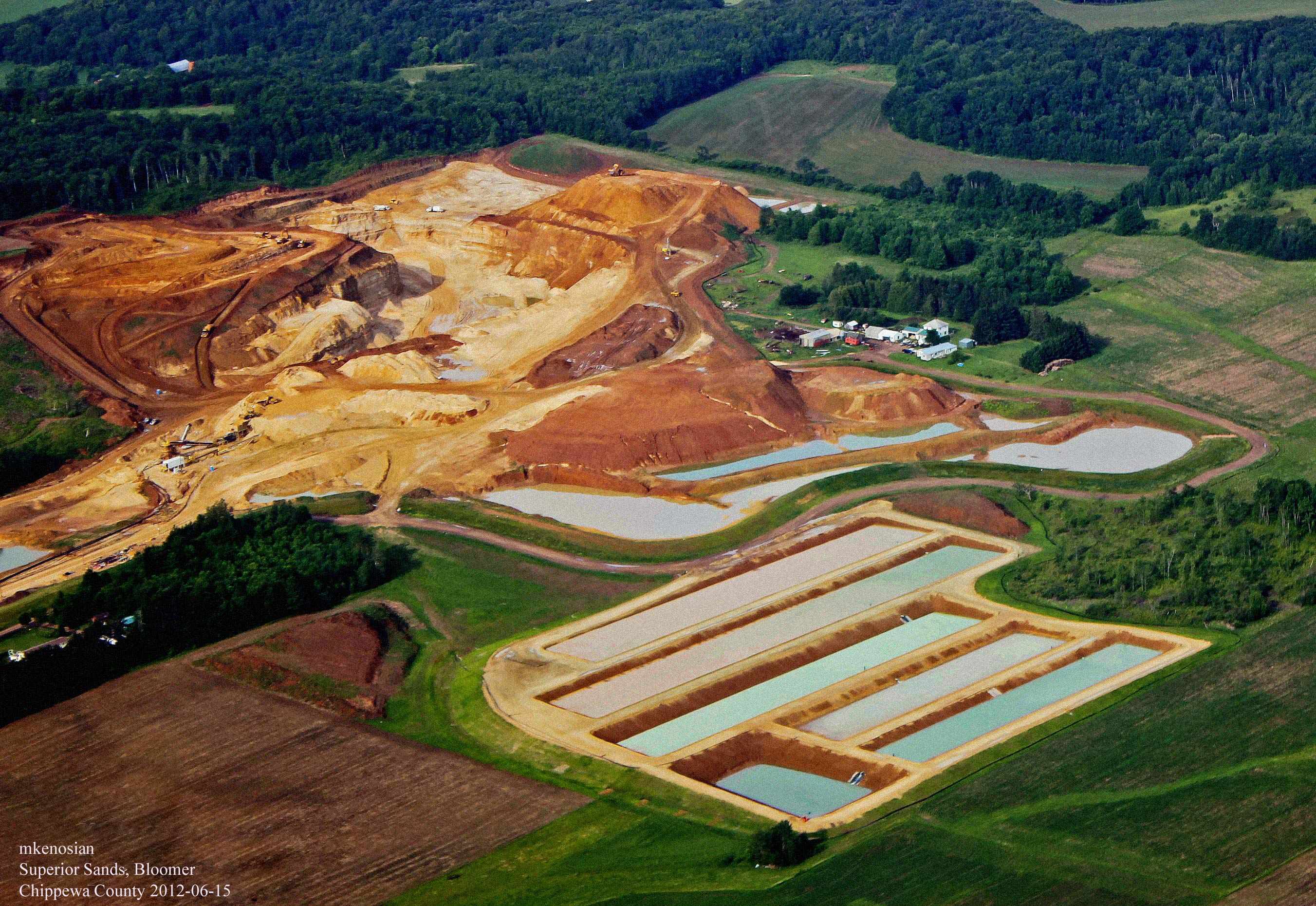
Fine silica sand, which is found in the southeast corner of Minnesota as well as across Wisconsin and parts of Iowa, has long been used to make glass and abrasives. More recently, however, it has found expanded demand as a part of the controversial natural gas extraction method known as hydraulic fracturing, or fracking.

Silica sand mine in Chippewa County, Wisconsin

Fracking is a process in which a mixture of silica sand, water, and fracking fluid (which contains hundreds of compounds, many of which are proprietary and thus not disclosed to the public), is pumped into holes deep drilled into the ground. There it creates high pressure, fracturing the rock and releasing pockets of natural gas.

The method has drawn fire from environmental advocacy groups for its environmental impact. This includes effects on air quality, the contamination of groundwater, the status of natural gas as a greenhouse-gas-emitting fossil fuel, and even for causing earthquakes in some locations. Proponents of natural gas, however, insist that it is a transition fuel, noting that burning natural gas releases half the carbon dioxide of burning oil, and that it is a cheap energy source of which the US has significant reserves. Some officials even credit natural gas with the recent decline of US emissions to a 20 year low as new gas exploration has cut the price per unit by more than half over the last four years.

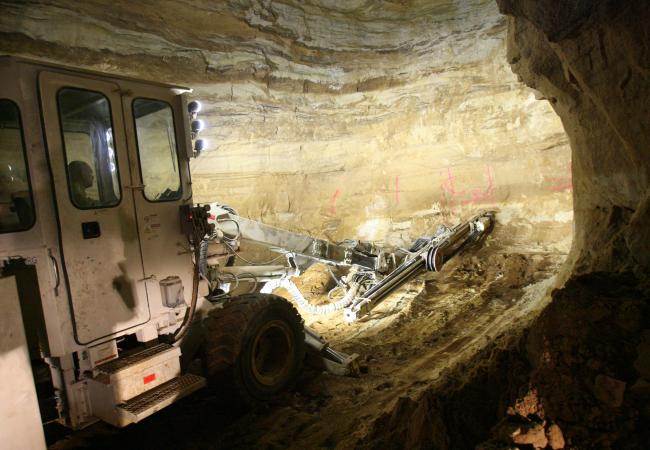
Miner preparing holes for blasting

While proponents and opponents of fracking debate, however, Minnesota and Wisconsin have become the center of a frac sand boom, with mines opening across the silica sand region to fuel the booming fracking industry. In response, some counties in Minnesota have already imposed moratoriums. In the words of Kristin Eide-Tollefson of the planning commission of Goodhue County's Florence Townships, "These permits just start flooding these communities once the doors are open". She says that local governments need more information. Concerns have been raised over the sand mines, not only for their role in the fracking industry, but also for their effects on surrounding communities, such as increased truck traffic, respiratory illness such as silicosis, and the loss of ecosystem services from the sand hills' water filtering. Although the mines must follow the rules protecting navigable waterways, accidental spills have also raised concerns. In addition, concerns have been raised over the mine's effect on the habitat of the endangered Karner blue butterfly.

The sand mining industry, though, says that the existing rules already do a good job of protecting the environment, and that regulations could affect investment and jobs. Rich Budinger of the Wisconsin Industrial Sand Company, regarding the moratoriums that some countries have imposed, says, "Resources at that point are sometimes redirected into areas where counties and townships understand non-metallic mining and industrial sand mining, and understand that regulations are in place to pretty much protect the safety and the environment of the region". He claims that a study like the one being proposed would take time and have an effect similar to the moratoriums.

Image Sources: FracSandFrisbee and MPR

Haze Reduction Plan Subject to Lawsuit

A new plan for reducing haze in Minnesota's wilderness areas and national parks is prompting legal action from environmental groups who claim it is not strict enough.

The lawsuit was filed in the Eighth Circuit U.S. Court of Appeals by a coalition of several environmental organizations, such as the National Parks Conservation Association. The heart of the controversy lies in the difference between federal haze rules, which use the 'command-and-control' technique of mandating that plants install the best available control technology, and the cross-state air pollution rule, a different program which allows more flexibility through trading of pollution credits.


Clear day and hazy day at Voyageurs National Park

Under federal environmental laws, Minnesota is required to make progress on reducing haze in certain national parks, such as the Boundary Waters and Voyageurs NP, which have suffered from vision-obscuring air pollution from industry and vehicles. According to the Minnesota Center for Environmental Advocacy, this haze is also a public health hazard, being linked to asthma and heart problems.

To comply with the federal mandates, Minnesota has submitted a Regional Haze State Implementation Plan (SIP) to the EPA. The plan centers around the Cross-State Air Pollution Rule, a system for trading of certain types of emissions.

Trading of pollution permits, commonly known as 'cap and trade', is controversial in part because it allows some firms to buy 'permission to pollute' from other firms that have not used all of their own permits. According to some critics, this creates a tendency for pollution 'hot spots' in certain areas (though a recent study at Indiana University disputed this claim). However, cap and trade also allows reductions in overall smog to take place where it is cheapest- if one plant can reduce emissions for a lower price than another, it can do so and sell its permits to the other plant.

The Minnesota Pollution Control Agency has not yet commented on the lawsuit.

Image Sources: Earthjustice

Wednesday, August 1, 2012

Brainerd's Energy Innovation- Sewer Power

The city of Brainerd has been flushing money down the drain- or so say those advocating an overlooked resource to heat and cool the city's buildings through Minnesota's bitter winters and increasingly hot summers. That resource is the sewers.

Scott Sjolund is technology supervisor Brainerd Public Utilities, which has already been using heat from waste water to heat its buildings and clear sidewalks of ice.  He explains: "Everybody heats water up ... and all that gets drained down the sewer, and that's potential energy that could be extracted. That's part of the equation." The other part is harnessing it most effectively.

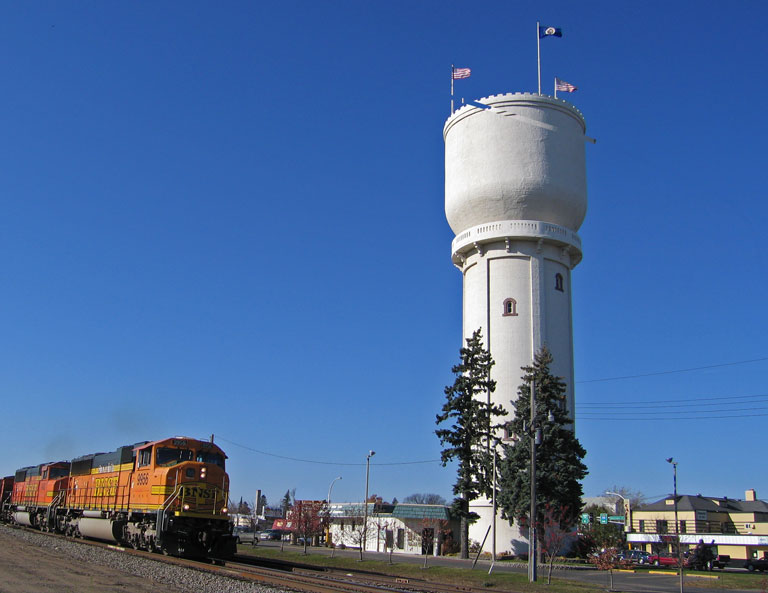
Brainerd's signature water tower, known as 'Paul Bunyan's Cup'


Hidden Fuels, a company based in the city, has an idea. The company, which received a $45,000 grant from the federal government and formed a partnership with the city and school district in 2009, has already used a series of sensors to map out the flow of heat in the sewers and find the hot spots. Peter Nelson of Hidden Fuels says, "It shows that there's a significant amount of energy — literally enough to heat hundreds of homes — within the streets of the city of Brainerd". There's enough heart in one pipe to heat the entire high school, according to Earl Wollert, the Brainerd School district director of buildings and grounds.

Hidden Fuels intends to use the energy by running water through a heat pump, running a turbine that generates the electricity that will heat or cool the building. It is similar to the use of geothermal energy, but with a bonus- the Brainerd sewer water, at 42-66 degrees Fahrenheit, is already generally in the temperature range. According to John Lund of the Oregon Institute of Technology, using the sewer water could cut costs in half compared to regular geothermal.

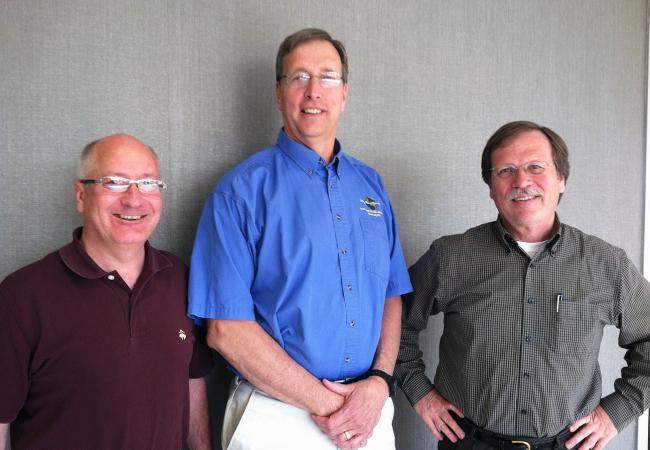
Jeffry Aga, Alan Cibuzar, and Peter Nelson of Hidden Fuels


There remain some drawbacks, however. One is the use of dirty water. Prior to now, geothermal systems have generally used clean water. In the words of Nelson, "We're dealing with contaminated fluids. And so that's really the challenge ... to be able to operate efficiently in that contaminated environment." The company intends to extract the energy in a closed system with a clean glycol process, reducing odor concerns.

Another possible problem is that with natural gas prices as low as they are, even the reduced-cost sewer power may be more costly than natural gas. Even though heating the school alone could save around $18,000 annually, it could still take years to break even compared to the cost of natural gas- though such calculations neglect the significant environmental costs of natural gas and the controversial fracking method by which it is gathered.

Regardless, with the price of fossil fuels in the future uncertain, the project is slated to be a long-term investment. Hidden Fuels plans to have the police station heated by the end of the year, with the school also on the agenda. In the Brainerd of tomorrow, the streets may not be paved with gold, but gold may certainly flow under them.


Image Sources: The Gilbert Lodge Blog, MPR